
Pax Manor
Hotel asset tagging has to separate two things that look identical on a corridor walk, which is the fixed asset and the consumable inventory item. A full departmental asset tagging and inventory management project for a new hotel, covering over 3,000 fixed assets and more than 10,000 inventory items.

Hotel asset tagging at a glance
| Client | Pax Manor |
|---|---|
| Sector | Hospitality |
| Year delivered | Delivered |
| Scope | 3,000+ assets tagged |
| Tag types used | Self-adhesive tags on departmental equipment, polyester tags on mattresses, carpets and soft furnishings |
Where they started
A hotel opening presents an asset problem that most businesses never face: everything arrives at once. Thousands of items land across housekeeping, food and beverage, front office, maintenance and back of house within a compressed window, and unless they are captured as they arrive, the opening inventory is reconstructed later from invoices and guesswork.
Hospitality also blurs a line that most asset registers depend on. Fixed assets and operating inventory sit side by side. A bed frame is a fixed asset. The linen on it is inventory. Both need tracking, they depreciate and deplete differently, and treating them as one list serves neither.
Then there are the soft furnishings. Mattresses, carpets, curtains and upholstered furniture represent serious money on a hotel balance sheet, and they are the assets most often left untagged because standard adhesive labels do not stay attached to fabric.
Our approach
Separating fixed assets from inventory. We ran two parallel exercises: fixed asset tagging for the 3,000-plus items belonging on the asset register, and inventory management for the 10,000-plus consumable and operating items that need counting and replenishment rather than depreciation.
Tagging by department. Housekeeping, food and beverage, front office and maintenance each hold different asset classes with different custodians. Codes were structured so each department can be filtered and audited on its own.
Polyester tags for soft furnishings. Mattresses, carpets and soft furnishings were tagged using polyester tags specified for textile surfaces, so identification survives cleaning and room turnover rather than lifting away within weeks.
A register built for room-level tracking. Because hospitality assets move between rooms constantly, the register was structured so items can be traced by location and reassigned as they move.
Tags produced for Pax Manor
Departmental tags batched for a hotel rollout.
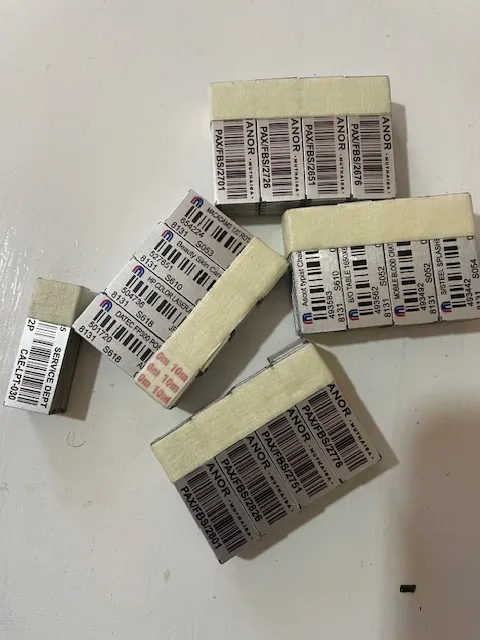
Tags coded by department and asset class.
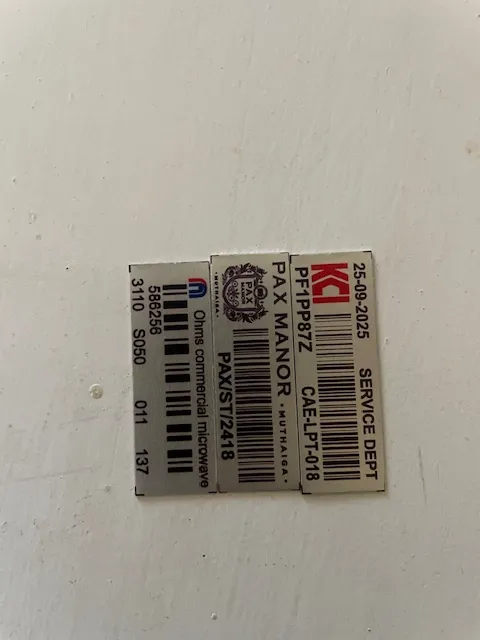
Each tag carries the department, asset code and barcode.
What they have now
Pax Manor opened with a complete asset position rather than one assembled after the fact: over 3,000 fixed assets tagged and recorded by department, and more than 10,000 inventory items counted and structured for ongoing management.
The soft furnishings piece matters more than it sounds. Because mattresses and carpets carry durable identification, replacement cycles can be planned against actual purchase dates and condition rather than estimated, which is the difference between budgeting a refurbishment and being surprised by one.
Running a hotel, serviced apartments or any estate with significant soft furnishings? See how we tag mattresses and carpets, or our asset tagging services.
Hotel asset tagging also has an aesthetic constraint that other estates do not. A tag in a guest room has to be readable by housekeeping and invisible to the guest, which usually means a discreet colour on a consistent placement rather than the high-contrast label you would use in a workshop. Get the placement rule agreed with housekeeping before application starts, because moving three thousand tags after the fact is the one part of this work that cannot be done quietly.
Ready to get your assets under control?
Call us to discuss your organisation, or email your asset list and we’ll scope it for you.