
Asset tagging and fixed asset registers in Rwanda
Asset tagging in Rwanda means specifying a tag that survives local conditions, fixing it to every asset, and building the fixed asset register that follows. Rwanda is compact, well organised and administratively demanding, which makes it an unusual asset tagging market. We tag the assets, verify what physically exists, and hand over a register your finance team can defend.
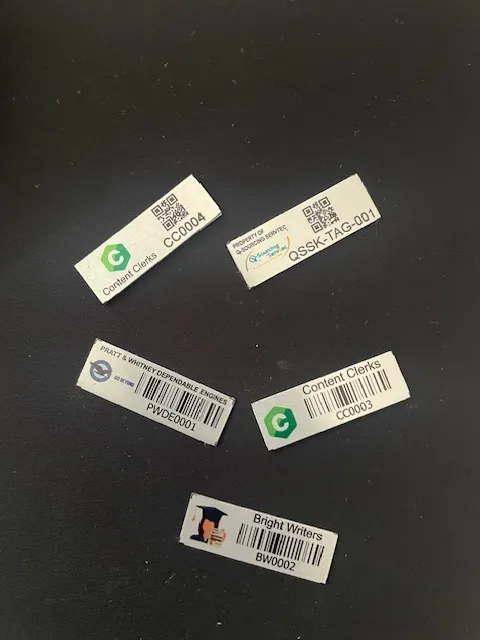
Rwanda is compact, well organised and administratively demanding, which makes it an unusual asset tagging market. Sites are close together, road access is good, and institutions are used to being asked for documentation. What that produces is engagements that are shorter than elsewhere in the region but held to a tighter standard of completeness.
The concentration of government, financial services and conference-driven hospitality in Kigali means most asset bases are dense rather than dispersed. Dense estates are cheaper to tag per asset and far easier to verify annually, which is why Rwandan clients tend to move to a regular verification cycle faster than clients elsewhere.
Where the asset base sits
Asset tagging follows the economy. These are the sectors that generate most of the tagging and verification work in Rwanda, and what each one brings with it.
| Sector | What it means for the register |
|---|---|
| Government and public agencies | A public sector with strong expectations around documentation and reporting. Assets are concentrated in Kigali with district-level estates outside it, and the reporting requirement is specific rather than general. |
| Financial services | Banks, insurers and microfinance institutions with branch networks. Repeated fit-outs, significant IT estates, and internal audit functions that will actually test the register. |
| Conference and hospitality | Kigali’s conference and hotel sector runs high-value fit-outs with heavy guest turnover. Room inventory, audio visual equipment and furniture that moves between function spaces. |
| Health and education | Hospitals, health centres and universities, with a mix of government and donor-funded equipment that has to remain distinguishable for reporting. |
What the environment does to tags
Specifying a tag for Rwanda is not the same as specifying one for an air-conditioned office in Nairobi. These are the conditions that decide the material.
Conditions that drive the specification
- Kigali’s climate is temperate and moderate by regional standards, which is kind to tags. Interior assets do well on quality polyester.
- Ultraviolet exposure at altitude still matters for anything positioned outdoors or in direct light through glass, which is common in modern Kigali buildings.
- Hospitality and health environments bring cleaning chemicals rather than weather. Frequent disinfection is what kills tags in those settings, and it needs specifying for.
Getting the work done across a border
- Short internal distances make Rwanda one of the most cost-efficient countries in the region to mobilise into, with most sites reachable within a day of each other.
- English is widely used in business and government, and our teams work in Swahili as well, so capture rarely needs a translation layer.
- Institutional access tends to be formal and scheduled. Access arrangements are agreed in advance rather than negotiated at the gate, which suits the way we plan mobilisations anyway.
Reporting and audit context
Rwandan reporting for larger entities follows IFRS, and public bodies work to public sector standards that place real weight on asset accountability. Both routes end in the same place: a register that can be tested by sample.
Rwanda is also a market where the register is asked to do double duty, supporting both statutory reporting and internal accountability reviews. Capturing custodian and department properly at tagging time is what lets one register serve both.
How the work runs
- Scope without travellingWe scope from your asset list, your site list and photographs. Nothing about a first conversation requires anyone to get on a plane, and scoping remotely keeps the quote honest rather than padded with speculative mobilisation.
- Specify tags to the environment, not the catalogueTag material is chosen per surface and per environment. Getting this wrong across a border is expensive, because a failed tag is not a five minute fix when the site is a flight away.
- Mobilise once, work throughCross-border work is planned as a single continuous mobilisation rather than repeated short visits. Teams arrive with the tags already produced, work site by site, and leave with the register loaded.
- Capture, verify, reconcileAssets are captured as they are tagged, verified against whatever records already exist, and the differences are reported rather than quietly absorbed. The exception list is part of the deliverable.
- Hand over a register your team runsThe register is loaded into the asset management system, your people are trained on it while we are still on site, and you keep it. We are not trying to become a permanent dependency.
What you end up with
| Deliverable | Detail |
|---|---|
| Tagged assets | Every asset in scope carries a durable tag specified for its surface and environment, with a unique number that matches the register. |
| A verified register | Not a list of what should exist. A list of what was physically confirmed, with the discrepancies against your prior records reported separately. |
| Financial fields populated | Cost, acquisition date, category and location captured so the register supports depreciation and reconciles to your ledger. |
| The asset management system | Loaded, configured to your categories, locations and departments, with named user accounts and your team trained on it. |
| An exception report | Assets found that were not on any record, records with no asset behind them, and everything in between. This is usually the most valuable single document from the exercise. |
Questions about asset tagging in Rwanda
Will this meet public sector reporting requirements?
The register captures what public sector asset reporting is built on: unique identification, category, location, custodian, cost and acquisition date, with a physical verification behind every line. We also deliver the exception report, which is what makes the position defensible rather than merely tidy.
Do Kigali conditions need a heavy tag specification?
Interior office assets generally do not, and specifying them as though they were on a mine site is wasted money. Hospitality and health assets that face frequent chemical cleaning are the exception and are specified separately.
How long does a Kigali engagement take?
Shorter than most. Dense sites and short distances mean the same asset count that takes a week spread across a large country can often be completed in a few days here.
Do you send your own team or subcontract locally?
Our own team. Tags are produced to your numbering scheme before mobilisation and travel with us, and the people who capture the data are the people who train your team at handover. Subcontracting capture is how registers end up inconsistent between sites.
How is a cross-border engagement priced?
Two parts, stated separately. A per-tag or per-asset rate for the tagging and capture, and a mobilisation cost covering travel, accommodation and logistics. We show both rather than blending them, because a blended rate hides which part of the quote you can influence by consolidating sites.
Do we have to take the software as well?
No. Some clients take the tagging and verification and load the register into a system they already run. Others take the STL Asset Management System with it. The register is yours either way, and it is delivered in a format you can move.
If you are scoping asset tagging in Rwanda, tell us the number of sites and the rough asset count and we will come back with a fixed price, a mobilisation date and a sample of the register you will receive.
Related
Plan an asset tagging rollout in Rwanda
Share the approximate asset count, locations and required register fields so we can scope mobilisation, tag specification and delivery. Review our cross-border delivery approach and published tagging rates.
Ready to get your assets under control?
Call us to discuss your organisation, or email your asset list and we’ll scope it for you.