
Asset tagging and fixed asset registers in Malawi
Asset tagging in Malawi means specifying a tag that survives local conditions, fixing it to every asset, and building the fixed asset register that follows. Malawi’s institutional asset base is dominated by the public sector, the development sector and agriculture, with a compact commercial centre split between Lilongwe and Blantyre. We tag the assets, verify what physically exists, and hand over a register your finance team can defend.
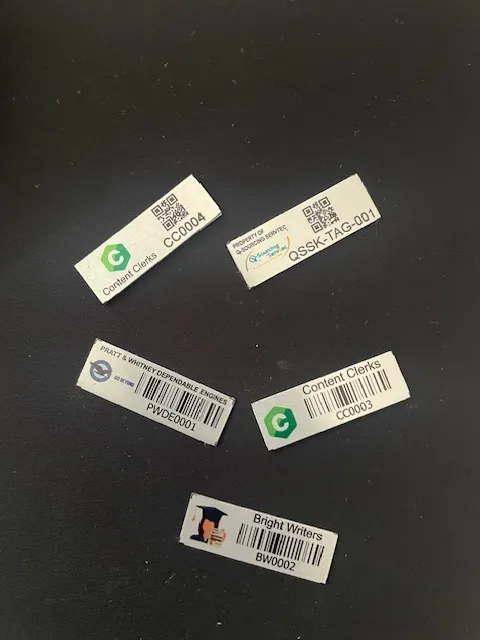
Malawi’s institutional asset base is dominated by the public sector, the development sector and agriculture, with a compact commercial centre split between Lilongwe and Blantyre. The country is small enough that a complete multi-site engagement is realistic within a single mobilisation, which is not true of most of its neighbours.
The recurring problem here is donor-funded equipment. Health facilities, educational institutions and public bodies hold substantial equipment bought through projects and programmes, and the reporting obligations attached to it frequently outlast both the project and the staff who ran it.
Where the asset base sits
Asset tagging follows the economy. These are the sectors that generate most of the tagging and verification work in Malawi, and what each one brings with it.
| Sector | What it means for the register |
|---|---|
| Health and education | Hospitals, health centres, universities and colleges holding a mix of government and donor-funded equipment that has to remain separable for reporting. |
| Development and humanitarian organisations | A large sector by asset volume, with grant-funded vehicles, IT and field equipment moving between projects and partners. |
| Government and public bodies | Ministries, agencies and local authorities with assets distributed across districts and limited internal capacity for verification. |
| Agriculture and agro-processing | Tobacco, tea and other processing operations with plant, vehicles and field equipment in dusty, abrasive conditions. |
What the environment does to tags
Specifying a tag for Malawi is not the same as specifying one for an air-conditioned office in Nairobi. These are the conditions that decide the material.
Conditions that drive the specification
- Lakeside and low-lying areas including the Shire valley are hot and humid, which works against adhesives on metal surfaces.
- Dry season dust abrades printed tag faces, particularly on agricultural and district assets.
- Highland areas are milder and interior institutional assets there can take a lighter, cheaper specification.
Getting the work done across a border
- Compact geography makes a single continuous mobilisation practical, including district sites outside Lilongwe and Blantyre.
- English is the working language of government and business, so capture and handover training are direct.
- Tags are produced in advance to your numbering scheme, removing any dependency on local production timelines.
Reporting and audit context
Malawian entities report under IFRS, with IFRS for SMEs available to qualifying entities. Public bodies and the health and education sectors face accountability requirements that place real weight on verified asset registers.
For donor-funded equipment the operative standard is usually the funder’s, which typically requires individual identification, traceability to the grant, documented verification and a defensible position at project end.
How the work runs
- Scope without travellingWe scope from your asset list, your site list and photographs. Nothing about a first conversation requires anyone to get on a plane, and scoping remotely keeps the quote honest rather than padded with speculative mobilisation.
- Specify tags to the environment, not the catalogueTag material is chosen per surface and per environment. Getting this wrong across a border is expensive, because a failed tag is not a five minute fix when the site is a flight away.
- Mobilise once, work throughCross-border work is planned as a single continuous mobilisation rather than repeated short visits. Teams arrive with the tags already produced, work site by site, and leave with the register loaded.
- Capture, verify, reconcileAssets are captured as they are tagged, verified against whatever records already exist, and the differences are reported rather than quietly absorbed. The exception list is part of the deliverable.
- Hand over a register your team runsThe register is loaded into the asset management system, your people are trained on it while we are still on site, and you keep it. We are not trying to become a permanent dependency.
What you end up with
| Deliverable | Detail |
|---|---|
| Tagged assets | Every asset in scope carries a durable tag specified for its surface and environment, with a unique number that matches the register. |
| A verified register | Not a list of what should exist. A list of what was physically confirmed, with the discrepancies against your prior records reported separately. |
| Financial fields populated | Cost, acquisition date, category and location captured so the register supports depreciation and reconciles to your ledger. |
| The asset management system | Loaded, configured to your categories, locations and departments, with named user accounts and your team trained on it. |
| An exception report | Assets found that were not on any record, records with no asset behind them, and everything in between. This is usually the most valuable single document from the exercise. |
Questions about asset tagging in Malawi
Can the register separate donor-funded equipment?
Yes. Funding source is captured at asset level during tagging, so the register can be filtered by grant, project or funder. Reconstructing that afterwards from procurement files is the exercise most organisations are trying to avoid.
What specification suits Malawian conditions?
Quality polyester for interior institutional and office assets, anodised aluminium or acetone-activated tags for outdoor, agricultural and plant assets. The lakeside and valley humidity is the reason not to use adhesive-only tags on metal there.
Can district health facilities be covered?
Yes, and Malawi’s geography makes it more practical than in most of the region. District sites are routed into the same mobilisation rather than quoted as separate visits.
Do you send your own team or subcontract locally?
Our own team. Tags are produced to your numbering scheme before mobilisation and travel with us, and the people who capture the data are the people who train your team at handover. Subcontracting capture is how registers end up inconsistent between sites.
How is a cross-border engagement priced?
Two parts, stated separately. A per-tag or per-asset rate for the tagging and capture, and a mobilisation cost covering travel, accommodation and logistics. We show both rather than blending them, because a blended rate hides which part of the quote you can influence by consolidating sites.
Do we have to take the software as well?
No. Some clients take the tagging and verification and load the register into a system they already run. Others take the STL Asset Management System with it. The register is yours either way, and it is delivered in a format you can move.
If you are scoping asset tagging in Malawi, tell us the number of sites and the rough asset count and we will come back with a fixed price, a mobilisation date and a sample of the register you will receive.
Related
Plan an asset tagging rollout in Malawi
Share the approximate asset count, locations and required register fields so we can scope mobilisation, tag specification and delivery. Review our cross-border delivery approach and published tagging rates.
Ready to get your assets under control?
Call us to discuss your organisation, or email your asset list and we’ll scope it for you.