
Reconciling the fixed asset register to the general ledger
Fixed asset reconciliation is the step that turns a physical count into something finance can sign. Without it you have two versions of the truth and no way to choose. Almost every organisation has a fixed asset register and a general ledger that disagree. The gap is rarely mysterious. It comes from four causes, in a predictable order, and working through them in that order turns a week of investigation into an afternoon.
In this article
Fixed asset reconciliation: the short version
- Reconcile by category, at a fixed date, on cost and accumulated depreciation.
- Check in order: missing additions, unrecorded disposals, category mismatch, tax treatment.
- Fix the source asset, never post a balancing figure to make it agree.
- Enter assets at purchase, not at year end. This single change removes most of the gap.
- Reconcile quarterly. A month of differences is an hour of work; a year is a week.
What you are reconciling
Three totals, by category, at a fixed date.
- Cost. The register’s total acquisition cost against the ledger’s fixed asset cost accounts.
- Accumulated depreciation. The register’s accumulated depreciation against the ledger’s accumulated depreciation accounts.
- Net book value. Which follows from the first two, and is the number that appears in the accounts.
Reconcile by category, not asset by asset. Differences cluster in one or two categories, and asset-level work is a slow way to discover that.
The four causes, in the order to check them
| Cause | Symptom | Fix |
|---|---|---|
| Additions not entered | Ledger cost exceeds register cost. Most common of all. | Pull the year’s capital additions from the ledger and match to register entries. The unmatched ones are your list. |
| Disposals not removed | Register cost exceeds ledger cost, and assets in the register cannot be found. | Match disposal journals to register disposals. Remove what was actually disposed of. |
| Category mismatch | Totals agree overall but individual categories do not. | Compare category by category and move the misfiled assets, not the numbers. |
| Tax treatment differences | A consistent proportional gap, often close to the VAT rate. | Confirm whether costs are recorded gross or net in each system, and standardise. |
Work them in that order. Additions and disposals typically account for the large majority of the gap, and clearing them often makes the remaining difference small enough to explain in a sentence.
A workable method
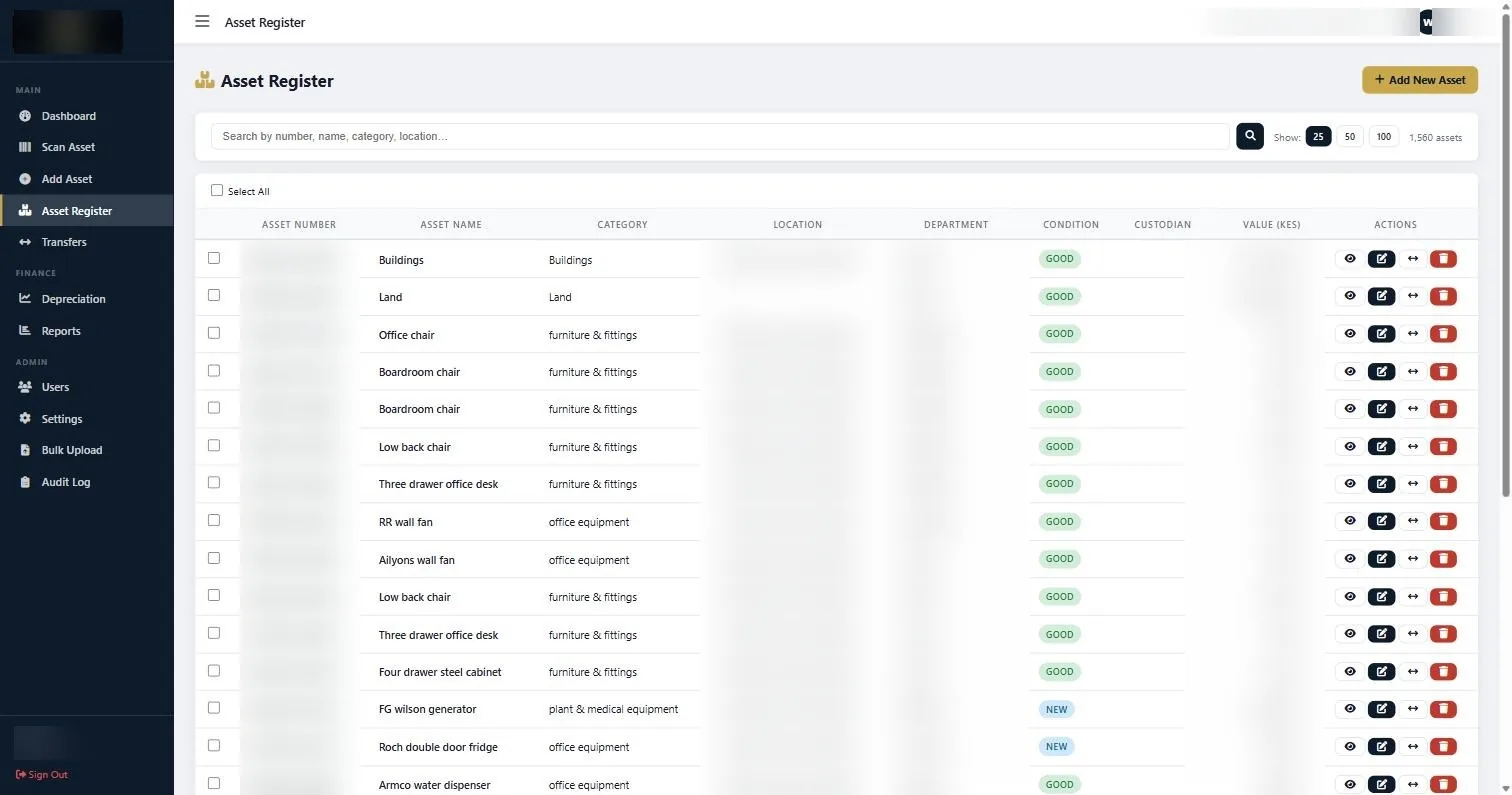
Step one. Export the register to CSV as at the reconciliation date and group by category. Export the ledger balances for the same date and categories.
Step two. Put them side by side and compute the difference per category. Do not start investigating until you can see where the difference sits.
Step three. Take the largest category difference first. Pull the year’s movements for that category from both systems and match them. The unmatched items are the explanation.
Step four. Fix the source, not the total. If an addition is missing from the register, enter the asset properly with cost, date and category, rather than posting a balancing figure.
Step five. Document what you found and what you changed. Next year’s reconciliation starts from this note.
Why balancing entries are the wrong answer
It is tempting, when a category is out by a modest amount, to post an adjustment and move on. It reconciles, the deadline passes, and the problem appears to be solved.
It is not. The underlying asset is still missing from, or wrongly present in, the register. The depreciation for that asset is still wrong, so next year the gap reopens and grows. And an auditor who samples that category will find an adjustment with no supporting asset behind it, which is a worse finding than the original difference.
The only defensible reconciliation is one where every difference is explained by a real asset, a real disposal or a real treatment decision.
Book an asset verification assessment
Send your current register and approximate asset count. We will identify the practical steps needed to verify, reconcile and tag the assets. Request a verification assessment →
The process fixes that stop it recurring
- Enter assets at purchase, not at year end. The single highest-value change. Tie register entry to the goods receipt or invoice approval step.
- Route disposals through one process. Nothing leaves the building without a disposal record, and the disposal journal and the register update happen together.
- Fix categories once. Agree the list with finance, use the same list in both systems, and stop creating new ones ad hoc.
- Reconcile monthly or quarterly, not annually. A month’s worth of differences takes an hour. A year’s worth takes a week.
What good looks like
A reconciliation that runs to a small number of explained items, produced in an afternoon, with a documented note that the following year’s team can pick up.
Getting there usually takes one hard year, because the first reconciliation after a genuine physical verification carries the accumulated drift of everything that was never entered or never removed. That first pass is uncomfortable and it is also the point of the exercise.
Common questions about fixed asset reconciliation
How big a difference is acceptable?
Materiality is a judgement for you and your auditor. But a difference you cannot explain is a problem at any size, because you do not know what it is hiding.
Should the register or the ledger be treated as correct?
Neither by default. The physical verification establishes what exists; both systems are then corrected to reflect it.
What if the original purchase cost cannot be found?
Record a documented estimate, agreed with your accountant, and note the basis. An undocumented number is worse than a documented estimate.
Do we reconcile depreciation as well as cost?
Yes. Cost agreeing while accumulated depreciation does not usually means rates or useful lives differ between the systems, which will get worse every year until it is fixed.
How long should the first reconciliation take?
Longer than you expect, because it carries every year of accumulated drift. Budget for a real piece of work and it will be the last time it is one.
Can the system produce what we need for this?
Yes. Export the register and the depreciation schedule to CSV, group by category, and compare against the ledger balances for the same date.
If your first fixed asset reconciliation produces a large unexplained difference, do not force it to zero with a single adjusting entry. Categorise the difference first, because each category has a different owner and a different fix.
Continue with the right next guide
Book an asset verification assessment
Send your current register and approximate asset count. We will identify the practical steps needed to verify, reconcile and tag the assets.