
How to conduct a fixed asset count
A fixed asset count is not a stocktake. You are proving that each record in the register corresponds to something that physically exists, and that is a different exercise. A fixed asset count is not an inventory exercise with a different name. It is the process that turns a list of claims into a verified position, and the value of it lies entirely in what does not reconcile.
In this article
The fixed asset count: the short version
- Count in both directions. Floor to register is the one that finds what you never entered.
- Work room by room, not down the list.
- The exception report is the deliverable, not the tidy register.
- Never write off a missing asset during the count. Give the search a fixed window first.
- Reconcile to the ledger by category, not asset by asset.
What a count is trying to establish
Two directions, and both matter.
Register to floor. Take a record and find the asset. This is what an auditor does when sampling, and it tests whether your register contains things that no longer exist.
Floor to register. Take an asset and find the record. This is what most organisations skip, and it is how you discover the equipment that was bought and never entered.
A count that only tests one direction gives you half a picture. In practice the floor-to-register direction usually produces the more uncomfortable findings.
Before the count
- Freeze movements for the counting period where you can, or record any movement that happens during it. Assets moving mid-count is the main cause of double counting.
- Print or export the asset list per location. Not one list for the whole organisation.
- Tell the departments. A count in an occupied office goes twice as fast when people expect you.
- Arrange access to restricted areas, locked stores and anything needing an escort.
- Charge the scanners and take a paper fallback.
During the count
Work room by room, in a fixed order, closing each room completely before moving on. Do not work down the list; work around the room and let the list follow you.
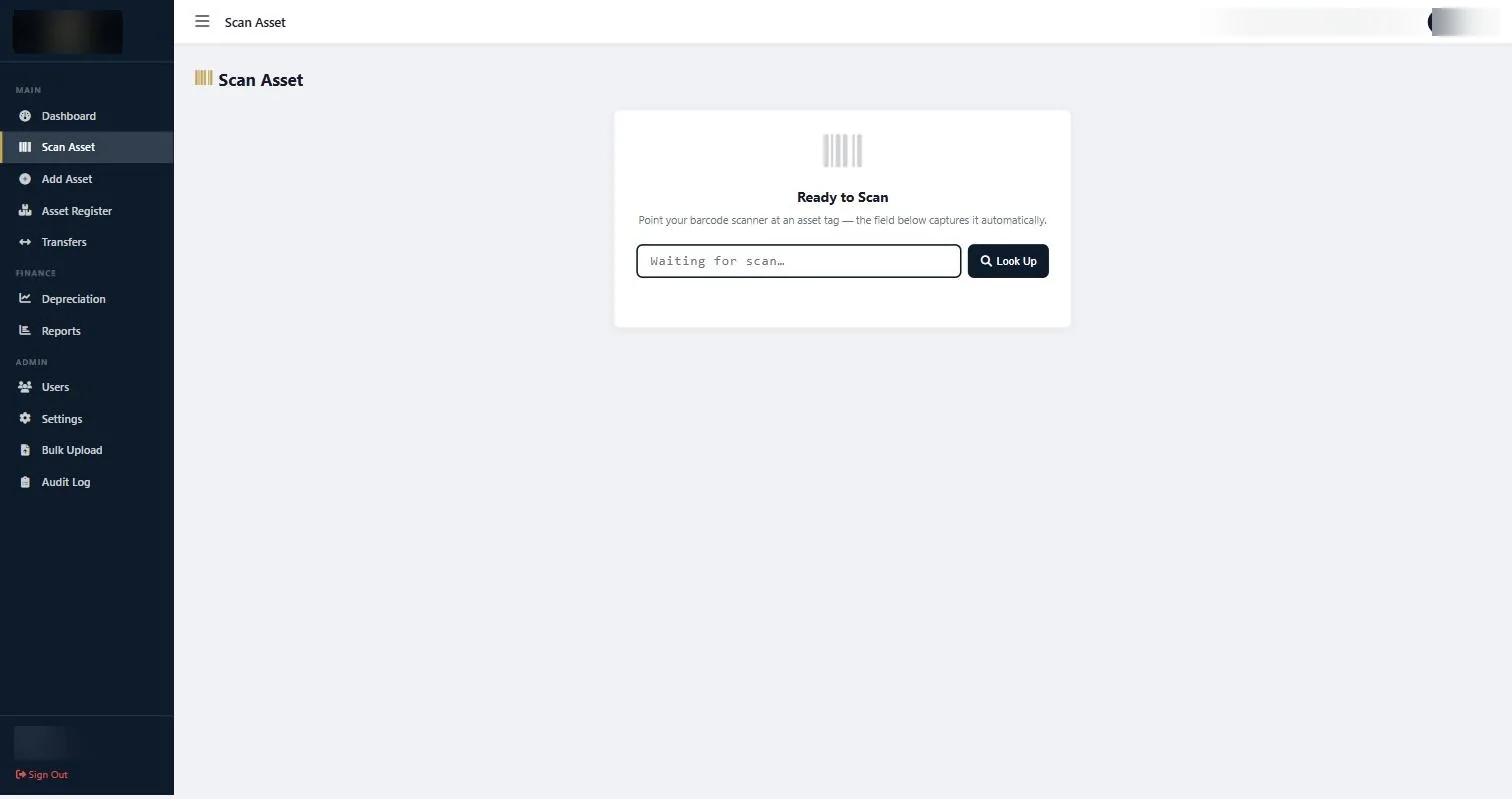
For each asset, three checks in this order. Does it scan? Does the record describe this object, including the serial number where there is one? Is the condition still what the record says?
Update condition and location on the spot. It will not be remembered accurately an hour later, and a count that produces no updates has not really looked.
The four exception types
| Finding | What it usually means | Action |
|---|---|---|
| Found, wrong location | An unrecorded movement. By far the most common finding. | Update location, or raise a transfer if it should go back. |
| Found, not in register | Bought and never entered. Usually recent purchases. | Tag it, add it, and fix the purchasing-to-register process. |
| In register, not found | Could be missing, could be elsewhere, could be out for repair. | Mark for follow-up. Do not write off during the count. |
| Tag failed | Environmental or accidental. | Identify by serial, re-tag with the same number, log it. |
Book an asset verification assessment
Send your current register and approximate asset count. We will identify the practical steps needed to verify, reconcile and tag the assets. Request a verification assessment →
After the count
Produce the exception report before you produce anything else. It is the deliverable. A count that ends with a tidy register and no exception list has absorbed its findings instead of reporting them.
Then work the not-found list. Give it a fixed window, usually two to four weeks, and chase each item with the department and custodian. A high proportion turn up: in another building, in a store, with a member of staff, or at a supplier for repair.
Only what remains after that window should go to management for a write-off decision, with the evidence of the search attached. Writing off during the count is how organisations write off assets that are physically present.
Reconciling to the ledger
Once the physical position is settled, reconcile it to the general ledger by category rather than asset by asset. Differences concentrate in a few categories and asset-level reconciliation is a slow way to find that out.
The four usual causes, in the order worth checking: additions bought but never entered, disposals removed physically but never in the books, assets sitting in the wrong category, and costs recorded net of tax in one place and gross in the other.
How often, and when
Annually is the minimum for most organisations, timed so the verified position supports the audited accounts rather than arriving after them.
Twice a year is justified for IT equipment, tools and anything on a site with high staff turnover. Rolling counts, where a portion of the estate is verified each quarter, work well for large multi-site organisations and spread the effort.
What matters more than frequency is that the count is genuine. One honest count a year beats four rounds of confirming the list.
Common questions about fixed asset count
How long does a count take?
With tagged assets and a scanner, a few hundred assets a day per person is comfortable. Untagged assets are several times slower because identification becomes research.
Should the same people count every year?
Consistency helps speed but independence helps rigour. Many organisations rotate, or have internal audit observe a sample.
What proportion of assets should we expect to be missing?
It varies enormously by sector and by how long it has been since the last genuine count. What matters is the trend: a rising not-found rate signals a control problem, not a counting problem.
Do we need to count everything every year?
Not necessarily. Rolling counts covering the whole estate over a year are acceptable to most auditors, provided coverage is documented.
Can our auditor rely on our count?
They are more likely to if it is documented, if exceptions are disclosed, and if they were able to observe part of it. Ask them what they need before you plan the round.
What if we find an asset that belongs to someone else?
Record it as present but not owned, so it appears in the physical inventory without entering the capitalised register.
If a full fixed asset count feels impossible this year, do one department properly instead of the whole estate badly. A complete count of one floor is worth more than a partial pass over everything.
Continue with the right next guide
Book an asset verification assessment
Send your current register and approximate asset count. We will identify the practical steps needed to verify, reconcile and tag the assets.