
Asset disposal: the step that quietly wrecks fixed asset registers
The asset disposal process is where most registers quietly break, because the physical item leaves long before anybody removes the record. Disposal is the one lifecycle stage nobody owns, which is why ghost assets are the most common audit finding. Here is a process proportionate enough to actually survive.
In this article
The asset disposal process: the short version
- Ghost assets exist because disposal has no natural paper trail, not because anyone was careless.
- A disposal needs authorisation, physical removal, accounting treatment and a register update. Skipping any one leaves a problem.
- Mark assets as disposed rather than deleting the row. A deleted row has no history and no evidence.
- IT equipment needs data wiped and recorded before it leaves. Copiers are the commonly forgotten case.
- Bulk register lines make partial disposals impossible to record correctly.
The step that quietly breaks registers
Every fixed asset leaves eventually. It is sold, scrapped, donated, traded in, stolen or simply becomes unusable. That is normal and expected.
What is not normal, and yet is almost universal, is that the departure leaves no trace in the register. The asset physically goes. The record stays. It keeps depreciating, keeps sitting on the balance sheet, and keeps appearing in your insurance declaration.
Assets in this state are called ghost assets, and they are the single most common fixed asset audit finding. Not because organisations are careless, but because disposal is the one lifecycle stage nobody owns. Acquisition has a purchase order. Transfer at least has two people who know it happened. Disposal has a skip.
What a disposal actually involves
Four things have to happen, and skipping any one of them leaves a problem.
1. Authorisation
Somebody with authority decides the asset should go, and that decision is recorded. This is the control that stops assets being disposed of by whoever happens to be holding them.
2. Physical removal
The asset leaves, through sale, scrapping, donation or trade-in. If it carried data, that data is dealt with first.
3. Accounting treatment
The asset’s cost and accumulated depreciation come out of the books, and any gain or loss on disposal is recognised. An asset sold for more than its net book value produces a gain; less produces a loss. Either way it has to be recognised, not ignored.
4. Register update
The asset is marked as disposed with the date, method and reason, and evidence is attached. It should not simply vanish from the register, because then you cannot answer questions about it later.
The distinction that matters
Deleting a row and recording a disposal are not the same thing. A deleted row leaves no history and no evidence. A recorded disposal is a transaction you can produce when someone asks.
Disposal methods and what each needs
| Method | Evidence to keep | Watch out for |
|---|---|---|
| Sale to a third party | Sale agreement or receipt, proceeds recorded, buyer identified | Sales to staff or related parties need explicit approval and a defensible price |
| Trade-in | Supplier documentation showing the allowance given | The trade-in value is disposal proceeds, not a discount on the new asset |
| Scrapping | Approval, scrapping certificate or disposal note, photographs | Nobody documents scrapping, which is exactly why it becomes a finding |
| Donation | Acknowledgement from the recipient, board or management approval | Donor-funded assets often cannot be donated onward without permission |
| Theft or loss | Police abstract, insurance claim, internal incident report | Write-off should follow the claim outcome, not precede it |
| Obsolescence in place | Assessment that the asset is no longer usable, approval to write off | An asset still physically present but written off must be flagged, not left ambiguous |
A disposal process that survives a busy week
The process fails when it is heavier than the event. A generator being sold justifies a formal file. A broken office chair does not, and if the only route is a formal file, the chair leaves undocumented and the register drifts.
What works is a single lightweight path with a proportionate approval threshold:
- Someone raises a disposal request against the asset number on the tag. Not a description, the number.
- Approval by value. Low-value items approved by a department head; above a threshold, by finance or management. Set the threshold so the common case is not painful.
- Data handled before the asset moves. Anything with storage gets wiped or destroyed, and that is recorded.
- Disposal executed and evidence captured at the moment it happens. A photograph of a scrapped item taken on the day is worth more than a memo written a month later.
- Register updated with date, method, proceeds and reason, and the accounting entry raised.
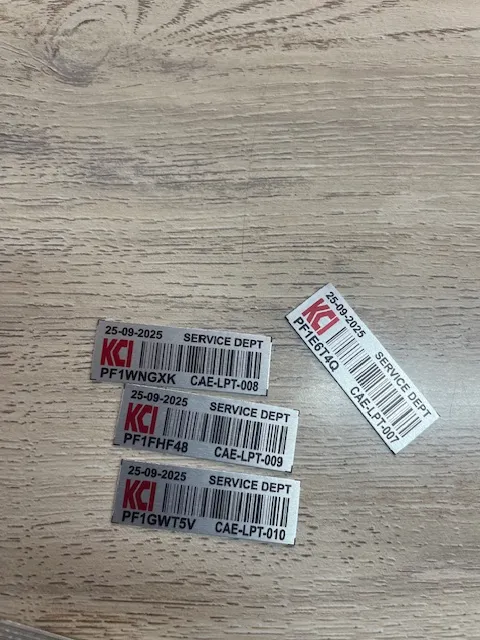
The single biggest improvement most organisations can make is step one: making the asset number the thing people refer to. That is what the tag is for.
Turn the process into a controlled workflow
See how a structured register handles custodians, transfers, audits, maintenance, disposal and reporting in one place. Book an asset system demo →
IT equipment needs an extra step
Laptops, desktops, servers, phones and copiers hold data, and disposal is the point at which that data most commonly escapes.
Before the asset leaves:
- Storage wiped to a standard, or physically destroyed if it cannot be wiped.
- The device removed from any management, licensing or access systems.
- Accounts and credentials associated with it revoked.
- The wipe or destruction recorded against the asset number.
Copiers and multifunction printers are the ones people forget. Many hold an internal drive with images of everything they have scanned or printed.
Special cases worth planning for
Donor-funded assets
Assets bought with grant funding often carry conditions on what may happen to them at end of life, and those conditions can outlast the project. Check the grant agreement before disposing of anything, and expect to report the disposal to the funder. When we built the register for Hennet, capture was structured so assets could be reported in the groupings funders actually ask about, which makes this straightforward rather than an archaeology exercise.
Leased assets
Not yours to dispose of. They should be clearly flagged in the register so nobody treats a returned lease as a disposal, or worse, sells something the organisation does not own.
Partial disposals from bulk lines
If the register says “office furniture, KSh 1.4m” as one line, you cannot dispose of forty chairs from it correctly. This is one of the strongest practical arguments for individual asset identification, and it is usually discovered at exactly the wrong moment.
Assets that fail verification
An asset that cannot be located is not automatically a disposal. Investigate first: it may have been transferred to another site, or recorded twice under different numbers. Writing off on the assumption of loss hides transfer problems that will recur.
Cleaning up historical ghost assets
Most organisations starting this work have years of accumulated ghosts. The approach that works:
- Verify physically. Walk the estate and confirm what exists. This is the only way to identify ghosts, and it is the bulk of the work.
- Categorise what is missing. Known disposals, suspected disposals with no record, genuine unknowns.
- Get a single write-off approved covering the historical cleanup, with the reasoning documented.
- Raise the accounting entries and reconcile the register to the ledger.
- Put the process in place so it does not recur, and tag everything so the next verification takes hours instead of days.
Auditors generally respond well to a documented historical cleanup. What they respond badly to is the same unexplained differences appearing year after year.
This is general guidance on asset disposal process and record-keeping, not accounting, tax or legal advice. Confirm accounting treatment with your accountant and any sector-specific disposal requirements with your own advisers.
Common questions about asset disposal process
What is a ghost asset?
An asset that appears on the fixed asset register but no longer physically exists, almost always because it was disposed of without being recorded. Ghost assets overstate the balance sheet, attract depreciation on nothing, and are the most common fixed asset audit finding.
What records should we keep when disposing of an asset?
Authorisation, the disposal method, the date, any proceeds, and evidence appropriate to the method: a sale receipt, a scrapping certificate and photographs, a donation acknowledgement, or a police abstract for theft. Keep it against the asset number, not loose in a folder.
Should we delete disposed assets from the register?
No. Mark them as disposed with the date, method and reason. A deleted row leaves no history and no evidence, so you cannot answer questions about it later. The register should show what happened, not just what remains.
How do we dispose of IT equipment safely?
Wipe or physically destroy the storage before the asset leaves, remove the device from management and licensing systems, revoke associated credentials, and record the wipe against the asset number. Do not overlook copiers and multifunction printers, which often hold an internal drive.
Can we dispose of assets bought with donor funding?
Often only with conditions, and sometimes only with the funder’s permission. Check the grant agreement, because obligations can outlast the project, and expect to report the disposal. Structure the register so donor-funded assets are identifiable in the first place.
We have years of ghost assets. How do we clean up?
Verify physically to establish what exists, categorise the differences, get a single documented write-off approved for the historical cleanup, raise the accounting entries and reconcile to the ledger. Then tag everything so the next verification is quick and the problem does not rebuild.
Run the asset disposal process in one direction only: approve, remove physically, record, then account. Doing the accounting first is how assets end up written off and still sitting in a store room.
Continue with the right next guide
Turn the process into a controlled workflow
See how a structured register handles custodians, transfers, audits, maintenance, disposal and reporting in one place.