
What Is Asset Tagging? A Complete Guide for Kenyan Businesses
What is asset tagging, put plainly: fixing a unique, permanent number to every asset you own so that the record and the object can never drift apart. If you’ve never tagged a fixed asset before, here’s what it actually involves, why Kenyan businesses use it, and how to tell if your organisation needs it.
In this guide
What is asset tagging, exactly?
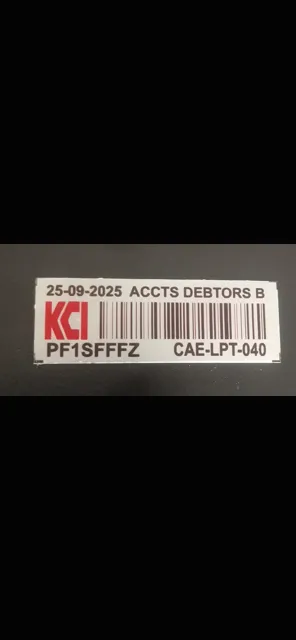
Asset tagging is the practice of attaching a unique, machine-readable label, usually a barcode or QR code, to a physical item your business owns, so that item can be identified, located and tracked for the rest of its useful life. The label itself is called an asset tag. Scan it, and you pull up everything recorded against that specific item: what it is, where it’s supposed to be, who’s responsible for it, when it was bought, and what it’s currently worth.
It sounds simple because it is: the value isn’t in the sticker, it’s in the discipline it forces. Once every laptop, desk and delivery van in your business carries a tag, “we think we have about 40 laptops” turns into “we have 42 laptops, here’s the list, and three are overdue for return from staff who left in March.”
Why it matters for Kenyan businesses
Three practical reasons come up again and again with the organisations we work with:
Audits and compliance. Statutory and internal auditors increasingly expect a verifiable fixed asset register, not a spreadsheet someone updates when they remember to. Kenyan capital allowance rules under the Income Tax Act tie directly to accurate asset records: the Kenya Revenue Authority can and does query depreciation claims that aren’t backed by a defensible register.
Insurance and loss prevention. A tagged, photographed, serial-numbered asset is a claim you can actually win. An untagged one is a dispute.
Operational efficiency. Manual stock-takes on an untagged estate can take days and still miss things. Scanning a tag takes seconds and can’t misread a description the way a person can.
This isn’t a uniquely Kenyan concern; it’s formalised internationally in standards like ISO 55000 for asset management, but it matters more here precisely because so few local businesses have adopted it yet. The ones that have are noticeably harder to catch out during an audit.
Types of asset tags
Not every tag is right for every asset. The main choices:
Barcode tags
The classic 1D barcode. Fast to scan with a dedicated barcode reader, cheap to produce, and familiar to most audit teams. The trade-off: you need a scanner, not just a phone.
QR code tags
Store more data than a barcode and scan with any smartphone camera: no dedicated hardware required. Increasingly the default choice for organisations whose staff will be doing spot-checks with their own phones.
Anodized aluminium tags
Rigid, metal, built to survive outdoor exposure, heat and rough handling. The standard choice for vehicles, machinery and anything that lives outside a climate-controlled office.
Polyester and vinyl tags
Lighter and cheaper, ideal for indoor office equipment (laptops, monitors, furniture) where the asset isn’t exposed to weather.
What can (and should) be tagged
As a rule of thumb: if an item is worth tracking on a balance sheet, has a useful life longer than a year, and could plausibly go missing or get misallocated, it’s a tagging candidate. In practice that usually covers:
- IT equipment: laptops, desktops, monitors, servers, networking gear
- Office furniture: desks, chairs, cabinets
- Vehicles and heavy machinery
- Medical and laboratory equipment
- Electronics and appliances: printers, projectors, fridges, UPS units
- Tools and portable equipment used across multiple sites
Consumables (stationery, single-use items, anything you’d expense rather than capitalise) generally aren’t worth tagging. The line is usually drawn wherever your organisation’s capitalisation threshold sits.
How the tagging process works
Regardless of who does the tagging, the underlying workflow is broadly the same:
- Scoping. Someone counts, or estimates, how many assets need tags and where they’re located.
- Physical verification. Each asset is checked against existing records (or counted fresh, if there’s no existing register) before anything is printed. This catches assets that were written off years ago but never physically removed, and vice versa.
- Tagging and data capture. The physical tag is applied, and its details (make, model, serial number, condition, location, custodian) are recorded against the tag’s unique code.
- Register delivery. All of that data is compiled into a single fixed asset register, ready to hand to your finance team or load into asset management software.
The part most businesses underestimate is step two. Skipping verification and just slapping tags on whatever’s in front of you produces a register that looks complete but isn’t accurate, which defeats the point.
Plan your asset tagging project
Send us your approximate asset count and locations and we will recommend the right tag, register structure and rollout plan. Request an asset tagging quote →
Asset tagging vs. digital asset management: don’t confuse the two
This trips people up more than you’d expect. “Digital Asset Management” (DAM) is a completely different category of software: it manages digital files like brand logos, marketing images and videos, not physical equipment. If you searched for “digital asset management system” looking for a way to track your laptops and furniture, what you actually want is fixed asset management software, which is what asset tagging feeds into.
Rule of thumb: if you can drop it, it’s a fixed asset. If you can only download it, it’s a digital asset.
Common mistakes to avoid
| Mistake | Why it’s a problem |
|---|---|
| Using tags without adhesive rated for the environment | Outdoor or high-heat tags peel off within months, and you lose the link to your register |
| Skipping pre-tagging verification | Bakes existing record errors into your new “clean” register |
| No consistent numbering convention | Makes cross-referencing with finance or procurement records painful later |
| Tagging once and never auditing again | The register decays the moment assets move, get disposed of, or are reassigned |
How much does asset tagging cost in Kenya?
Pricing generally scales with volume and material: expect a per-tag range roughly from KSh 80 at high volume up to KSh 120+ for smaller orders, plus the cost of on-site verification and data capture if you want a full register rather than just the physical tags. We’ve published our own current pricing, tier by tier, on our asset tagging services page.
What to look for in an asset tagging provider
- Transparent pricing: if a company won’t publish even a rough price range, that’s worth asking about directly.
- Pre-tagging verification included, not sold as a separate add-on you have to know to ask for.
- A real, exportable asset register at the end, not just stickers on your equipment.
- A path to ongoing management, ideally software that lets you keep the register current after the initial project, rather than a one-off count that goes stale in six months.
We cover the full loop: physical asset tagging and register development, plus an asset management system to keep that register live after we leave. Most of the organisations we work with start with one and add the other within a few months.
If you came here asking what is asset tagging, the shortest useful answer is that it is the step that makes a fixed asset register true. Everything downstream, verification, depreciation, disposal and audit, depends on that one number staying attached to that one object.
Frequently asked questions about what is asset tagging
What’s the difference between an asset tag and a barcode label?+
Do I need special software to use asset tags?+
How long do asset tags last?+
Can asset tags be removed or transferred to another item?+
Continue with the right next guide
Plan your asset tagging project
Send us your approximate asset count and locations and we will recommend the right tag, register structure and rollout plan.